Backyard Putting Green Installation in Ontario: Getting the Base and Turf Right
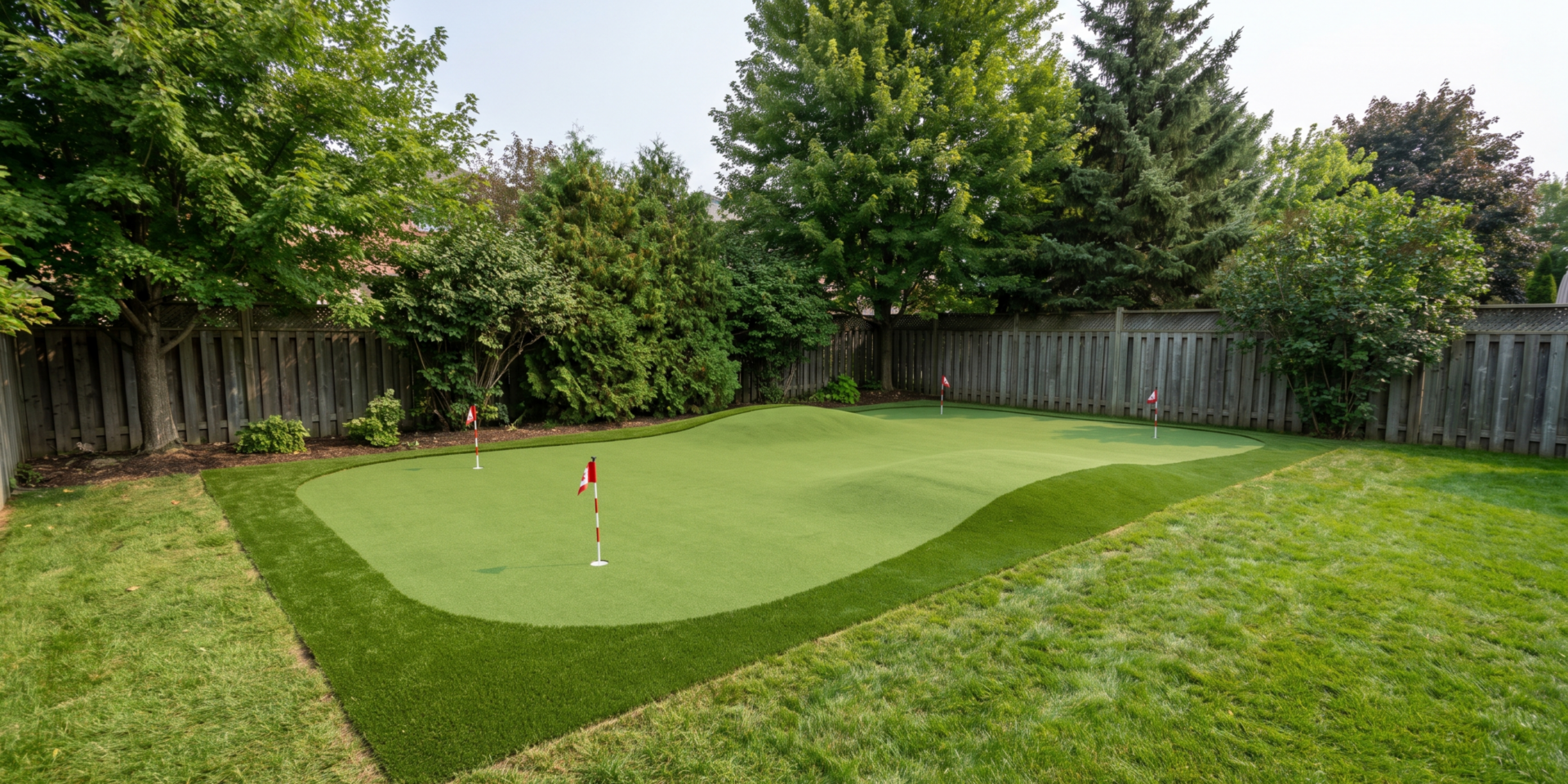
A putting green used to be something you drove to. Now it is something a growing number of Ontario homeowners, golf clubs, and community facilities are putting in their own backyard, right next to the tennis court, pool, or patio. Search interest in putting green installation has climbed sharply over the past year, and the reason is simple: synthetic turf has gotten good enough that a backyard green can hold a true, consistent roll without the daily mowing and watering a real green demands.
This guide walks through how a professional putting green installation actually comes together, from site assessment and base construction to turf selection, contours, drainage, and the Ontario-specific details that separate a green that plays true for fifteen years from one that goes lumpy after two winters.
Why Putting Greens Are Showing Up in More Ontario Backyards
A few things have converged to make this a realistic backyard project instead of a country-club-only feature. Synthetic turf technology has improved enough that a well-built green rolls close to what golfers expect on a real course, without the irrigation, mowing, and fertilizing schedule a natural grass green requires. At the same time, more Ontario homeowners are treating their backyard as a year-round living space rather than just a lawn, and a putting green fits alongside a sports court, an outdoor kitchen, or a pool deck without needing the water and sun that a swimming pool or vegetable garden demands.
Golf clubs and municipal facilities are part of this too. A short-game practice green next to a clubhouse gives members somewhere to work on chipping and putting without booking a tee time, and it holds up to far more daily traffic than a natural green built for occasional use.
Who Is Actually Building These
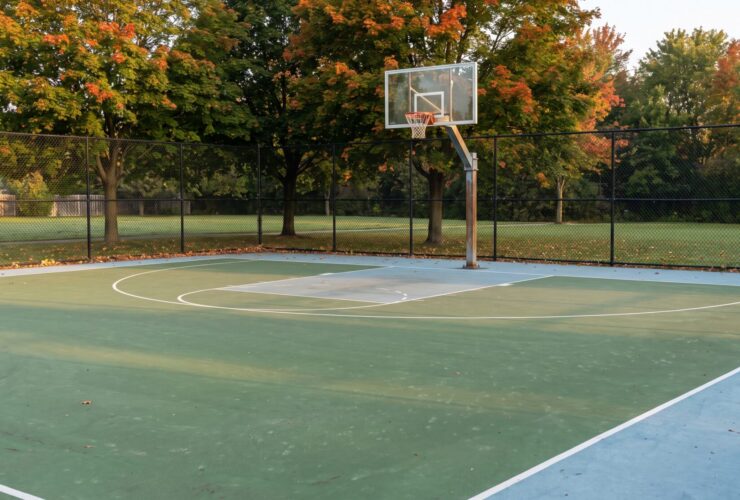
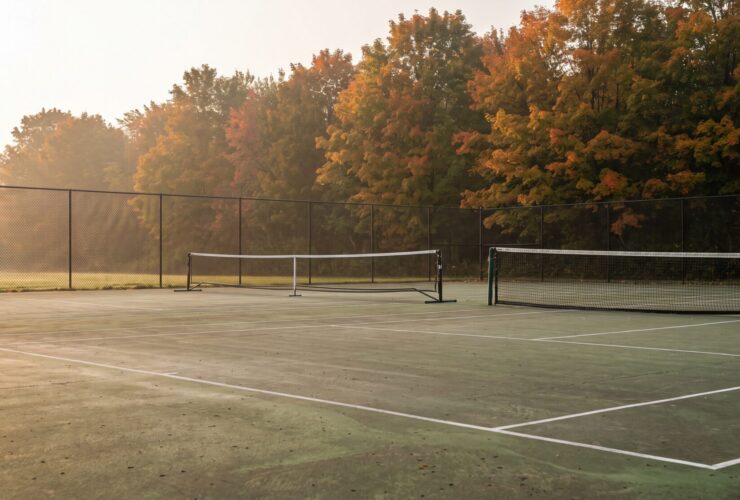
The requests tend to fall into a few groups. Homeowners with an underused section of backyard, often the same clients who already have a tennis or sport court and want a low-maintenance addition nearby. Golf clubs adding a short-game practice area separate from the main course. Community centres and condo boards looking for an amenity that appeals to a wide age range without the liability of a swimming pool. And a smaller group of serious golfers who want a dedicated space to work on their short game daily, rain or shine.
Synthetic Turf vs. Natural Grass for a Home Putting Green
This is the first real decision, and it shapes almost everything downstream: cost, maintenance, how the green performs in different weather, and how long it lasts before it needs attention. Natural grass greens exist in Ontario, mostly at golf courses with the crew and irrigation infrastructure to maintain them, but for a backyard installation the practical choice for most properties is synthetic turf built specifically for putting.
| Factor | Synthetic Turf Green | Natural Grass Green |
|---|---|---|
| Watering and irrigation | None required | Daily during growing season |
| Mowing | None | Multiple times per week, specialized mower |
| Roll consistency | Consistent year-round once installed | Varies with mowing height, moisture, growth stage |
| Usable season in Ontario | Spring through late fall, snow-dependent in winter | Growing season only, dormant or damaged in winter |
| Ongoing maintenance | Periodic brushing, occasional infill top-up | Mowing, aerating, fertilizing, pest and disease management |
| Typical lifespan | Long-term with proper base and UV-stable turf | Ongoing, but requires continual upkeep to stay playable |
| Best suited for | Most backyard and community installations | Golf courses and facilities with dedicated turf crews |
Why Most Ontario Installations Use Synthetic Turf
For a backyard or a clubhouse practice green, the maintenance gap is the deciding factor. A natural green needs a mowing height measured in millimetres, consistent watering, and regular aeration to stay playable, which is realistic for a golf course with grounds staff but not for a homeowner or a facility manager juggling a dozen other priorities. Synthetic turf trades a small amount of realism in ball behaviour for a green that plays the same way in July as it does in September, and that holds up through an Ontario winter without dying back.
What Goes Into a Professional Putting Green Installation
A putting green looks simple once it is finished, but the part that determines whether it plays true for years, or develops soft spots and uneven breaks within a season, is almost entirely underground. The process below reflects how a professional installation is sequenced, from the first site visit to the finished surface.
Step 1: Site Assessment and Layout Planning
Every installation starts with a look at the property: available space, existing grade, sun exposure, tree roots nearby, and how the green will connect to the rest of the yard. This is also when the design gets sketched out, including how many holes the green will have, where the fringe and rough sit, and whether the layout includes slopes and breaks or a flatter, more forgiving surface for casual play.
Step 2: Excavation and Grading
The existing sod and topsoil get removed to a consistent depth across the footprint, and the subgrade gets shaped to the intended slope. Getting this grading right matters for two reasons: it sets up proper drainage so water does not pool on the finished green, and it gives the base layers a stable, uniform surface to build on. This is the same laser-guided grading process CrowAll uses on sport court projects, since a putting green has the same underlying requirement: a subgrade that will not shift or settle unevenly over time.
Step 3: Base Construction
The base is what actually makes a synthetic green feel and play like a real one instead of a piece of carpet laid on dirt. It typically goes down in layers: a compacted aggregate base for structural stability and drainage, followed by a finer leveling layer that lets the installer shape gentle breaks and contours into the surface before the turf ever goes down. This is also where the design’s slopes and undulations get built, since it is far easier to shape a compacted aggregate base than to try to fake a break with turf padding alone.
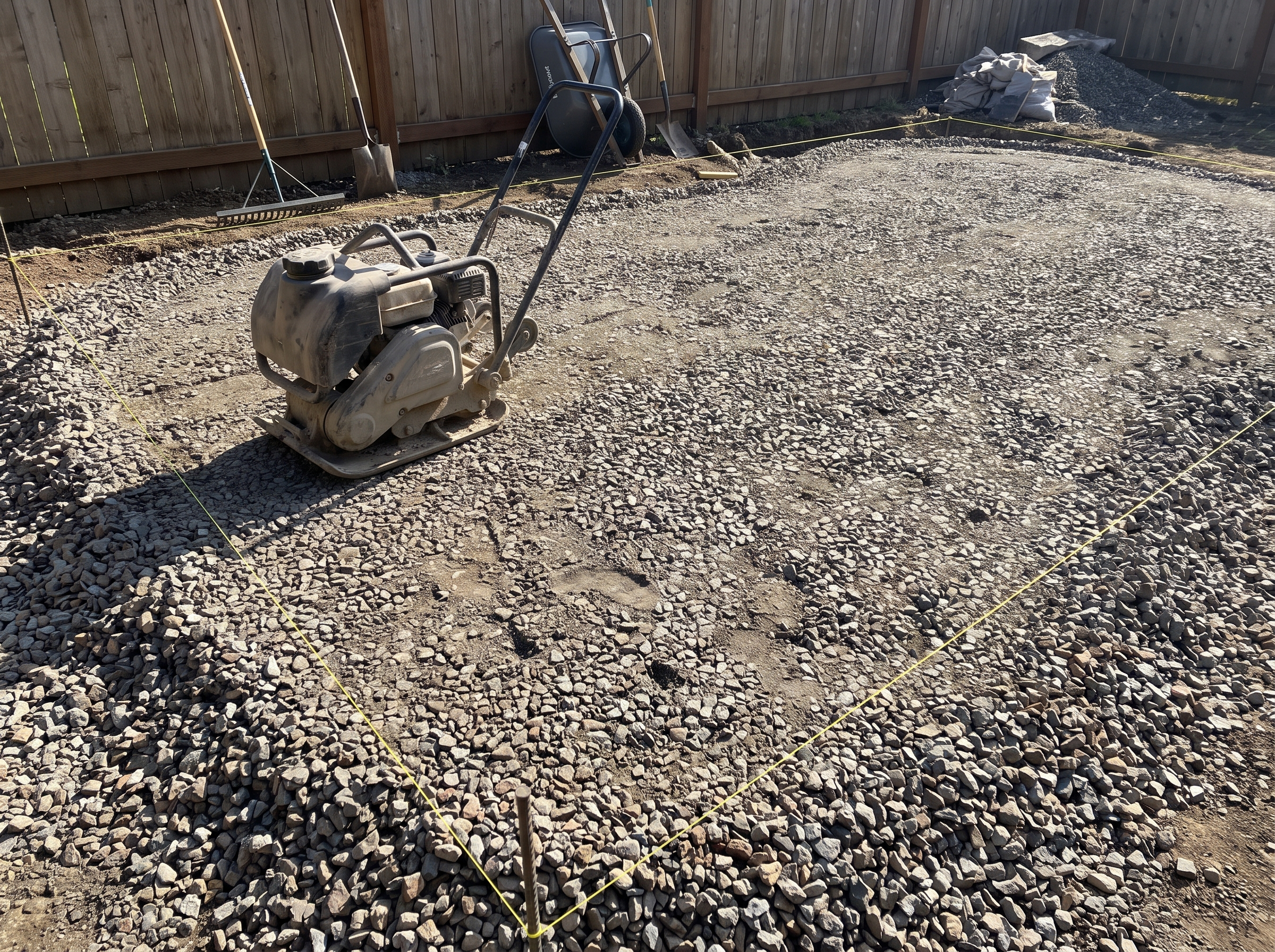
| Layer | Purpose |
|---|---|
| Subgrade | Excavated and graded native soil, sloped for drainage |
| Compacted aggregate base | Provides structural stability and allows water to drain through rather than pool |
| Leveling and shaping layer | Finer material used to fine-tune grade and build in contours and breaks |
| Synthetic turf and infill | The playing surface, with sand or rubber infill to stabilize fibers and set ball speed |
The USGA’s guidance on backyard putting greens outlines a similar layered approach for greens built with real turfgrass, using a gravel base topped with a rootzone mix. A synthetic installation follows the same underlying logic of a stable, well-drained base, just with an aggregate leveling layer and turf system in place of a grown-in rootzone.
Step 4: Turf Selection and Installation
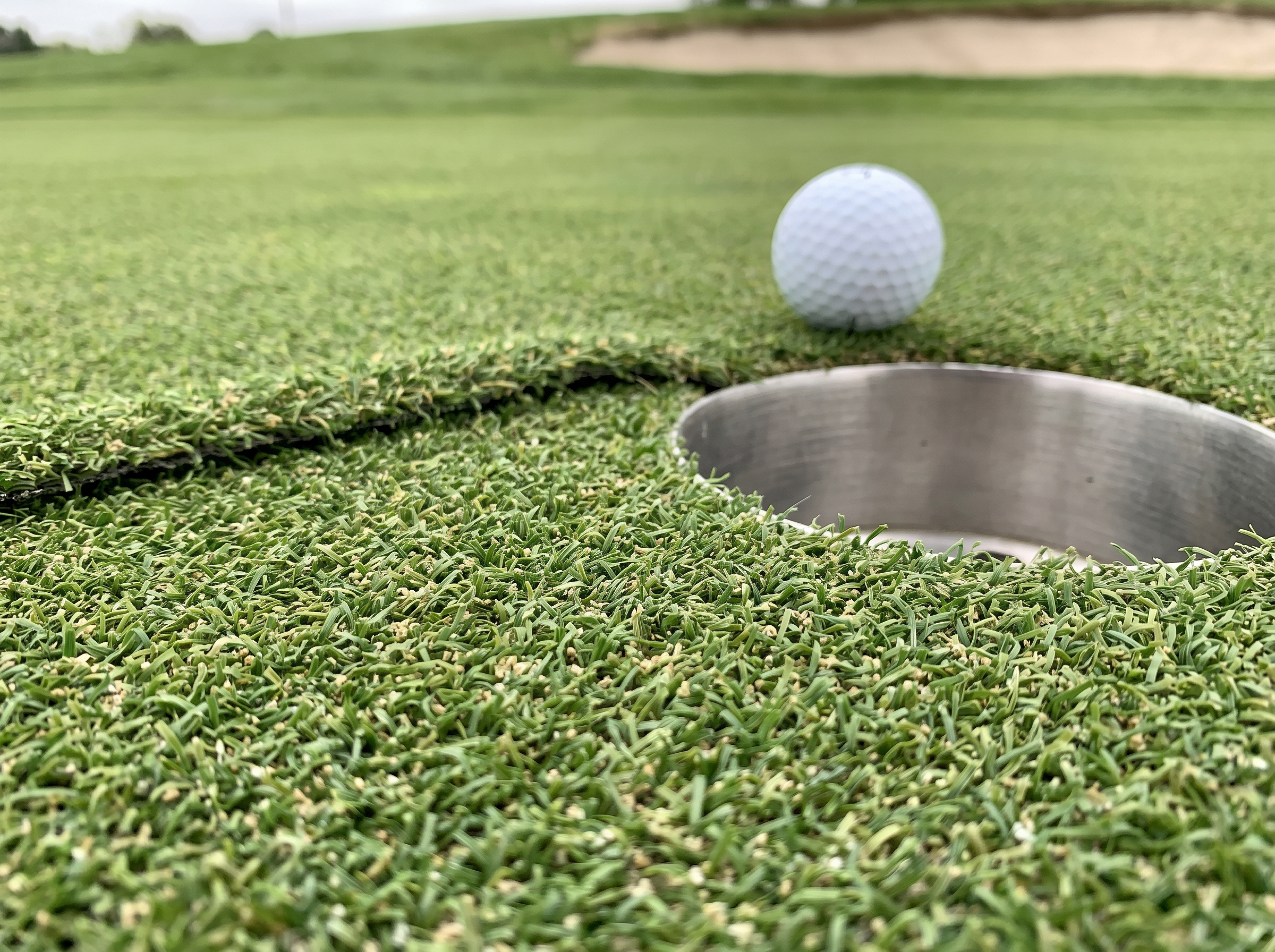
Putting green turf is a different product from the artificial grass used for a lawn or a sports field. It is built with a shorter, denser pile designed for a true roll, usually stabilized with a sand or rubber infill that also helps set ball speed. Faster greens use less infill and a shorter pile, while a more forgiving practice green for a family backyard often runs a bit slower and more consistent. The turf gets rolled out, seamed so the seams are not visible or felt underfoot, and secured around the edges before infill is worked into the fibers.
Step 5: Building In Breaks, Contours, and Cup Placement
A flat green gets boring fast. Most installations include at least gentle undulation, shaped into the base layer during construction, so putts actually break the way they would on a real course. Cup locations get set with enough variety in distance and angle that the green offers different practice shots rather than the same straight putt every time. A regulation cup is 4.25 inches in diameter and typically set at a consistent depth, whether the installation uses one hole or several.
Step 6: Edging, Fringe, and Surrounding Landscaping
The transition between the green and the rest of the yard matters both for how it looks and how it plays. A fringe collar, usually a slightly longer-pile turf, marks the edge of the putting surface and gives short chip shots somewhere realistic to land. Beyond that, most installations tie into the surrounding landscape design, whether that means a planting bed border, a bunker feature, or a simple mulch edge that keeps the lawn from creeping onto the turf.
Sizing and Design: How Big Should a Backyard Putting Green Be?
There is no fixed minimum size for a synthetic putting green, which is part of what makes it such a flexible backyard addition. A small green can fit in a modest side yard, while a larger installation on an acreage property can support multiple holes and real contour variety.
| Green Size | Typical Layout | Best Fit For |
|---|---|---|
| Small (compact side yard or patio-adjacent space) | One or two cups, minimal contour | Casual family use, short putts and chipping practice |
| Medium (typical suburban backyard) | Two to four cups, moderate breaks | Homeowners who want a real practice tool alongside casual play |
| Large (acreage or club practice area) | Multiple cups, varied slopes, chipping fringe | Serious golfers, clubs, and community facilities |
A useful way to think about sizing is how many distinct putts the green actually offers, more than raw square footage. A larger green with varied cup placement and contour gives more practice value than a small flat green, even if the flat green technically has more square footage of usable surface. This is the same design thinking that goes into a well-planned multi-sport court layout, where getting the most function out of the available footprint matters more than raw size.
Drainage and Ontario Climate Considerations
Ontario’s freeze-thaw cycle is unforgiving on anything built without proper drainage, and a putting green is no exception. Water that cannot drain through the base will pool, freeze, expand, and eventually push the surface out of level, creating soft spots or humps that were never part of the design.
Freeze-Thaw and Base Stability
A properly built aggregate base allows water to move through rather than sit on top of or within the structure. This is the same principle behind proper grading for sports court drainage, where the goal is always to get water moving off and through the surface rather than trapped in it. A green built on a poorly compacted or poorly drained base is one of the most common reasons a synthetic surface develops dips within a few seasons.
Best Time of Year to Install in Ontario
| Season | Considerations for Installation |
|---|---|
| Spring | Good window once the ground has thawed and dried out; high demand can mean longer lead times |
| Summer | Stable, dry ground conditions make excavation and base work straightforward |
| Fall | Often the most efficient window, cooler temperatures and typically lower contractor demand |
| Winter | Frozen ground generally rules out new excavation and base work until conditions thaw |
This lines up with the general guidance CrowAll gives for any outdoor surface project in Ontario: the goal is to have excavation and base work done while the ground is workable and before the risk of an early frost interrupting compaction. Our breakdown of the best time of year to build or resurface a sports surface in Canada applies just as directly to a putting green project.
What Affects the Cost of a Putting Green Installation
Every backyard is different, so a meaningful cost estimate depends on a site visit rather than a flat number, but the variables that move the price up or down are consistent across most projects.
| Factor | Why It Matters |
|---|---|
| Total square footage | Larger greens require more excavation, base material, and turf |
| Site access and existing grade | Difficult access or significant regrading adds labour and equipment time |
| Number of cups and contour complexity | More holes and shaped breaks require additional base shaping and layout work |
| Turf grade and pile height | Higher-performance putting turf built for a truer roll typically costs more than basic synthetic grass |
| Fringe, bunker, and landscaping extras | Chipping areas, bunkers, and landscape borders add material and labour beyond the putting surface itself |
| Drainage requirements | Poorly drained sites need additional grading or drainage work before base construction begins |
Because these variables interact, a small green with complex contours can end up costing more than a larger, flatter one. The most reliable way to get an accurate number for a specific property is a site visit, which is generally free through CrowAll’s consultation process.
DIY vs. Professional Installation
Small home-kit putting greens are a real option for homeowners with a modest budget and a flat, forgiving site, and plenty of DIY guides walk through the process for a simple flat green with a pre-built kit. Where a DIY approach tends to run into trouble is on the parts that are hardest to see and hardest to fix later: base compaction, drainage grading, and shaping realistic contours that hold their shape through freeze-thaw cycles rather than settling unevenly.
A professional installation brings equipment for proper excavation and compaction, experience reading a site’s drainage patterns before problems show up, and the ability to build in contours that actually play well rather than looking good on install day and turning lumpy within a year. For a larger project, a club practice green, or any site with drainage challenges or significant grade, the base work is worth getting right the first time rather than repairing a settled green two seasons in.
Maintenance: Keeping a Home Putting Green in Playable Shape
One of the biggest advantages of synthetic turf is how little ongoing work it needs compared to natural grass, but “low maintenance” is not the same as “no maintenance.” A small amount of regular care keeps the surface rolling true for years.
| Task | Frequency |
|---|---|
| Clear leaves and debris | As needed, especially in fall |
| Rinse off dust and pollen | Occasionally through spring and summer |
| Brush turf fibers to keep them upright | A few times per season |
| Check and top up infill | Annually or as needed |
| Inspect seams and edges | Seasonally, especially after winter |
| Professional inspection | Periodically, particularly heading into or coming out of winter |
This is a much shorter list than what a natural grass green requires, but it still benefits from the same kind of proactive attention CrowAll recommends for any outdoor surface. Our guide on the cost-benefit of professional maintenance makes the same case for a putting green as it does for a sport court: a small annual check catches problems while they are still cheap to fix.
Permits, HOA Rules, and Property Considerations in Ontario
Most residential putting green installations do not require a building permit, since they are a landscaping feature rather than a structure, but this varies by municipality and by the scope of the project. Significant regrading, drainage changes that affect neighbouring properties, or any structural elements like a retaining wall around the green can trigger permit requirements. It is worth checking with the local municipality before work begins, especially on projects that involve substantial excavation. Our overview of whether you need permits to build a sports court covers the same municipal process that applies to a larger backyard putting green project.
Homeowners in a subdivision with an HOA or condo boards considering a shared green should also check governing documents and, where relevant, provincial accessibility requirements for any shared amenity. Ontario’s accessibility standards, outlined by the province’s accessibility laws, are most relevant for community and commercial installations rather than a private backyard, but they are worth reviewing for any shared-use project.
Putting Greens as Part of a Larger Backyard Sports Investment
A putting green rarely exists in isolation on a property that already has, or is planning, other outdoor recreation space. It pairs naturally with a home tennis or pickleball court, a backyard volleyball court, or a general multi-sport layout, since the site prep, grading, and drainage principles carry across all of them. Properties that already have one sport surface often find that adding a putting green is a smaller project than the original court, since access and some site logistics are already worked out.
The same is true on the material side. Homeowners weighing turf options for a putting green often end up comparing the same synthetic products used elsewhere on the property. Our comparisons of artificial turf versus natural grass and how artificial turf compares to hard court surfaces cover the same underlying tradeoffs that apply to a putting green, just for a different sport.
Signs a Property Is a Good Candidate for a Putting Green
Not every yard is an obvious fit, and a short site assessment usually settles the question quickly. A good candidate typically has a reasonably flat or gently sloped area with enough sun exposure, room to fit at least a modest layout without crowding existing landscaping, and soil that can be graded to drain properly. Yards with significant tree cover overhead can still work, but root systems near the surface may limit exactly where excavation happens.
Properties with existing drainage problems, like standing water after rain, are not disqualified, but they usually need that issue addressed as part of the grading and base work rather than built around. This is the same evaluation CrowAll applies before any outdoor surface project, since the site conditions dictate the scope of prep work more than the finished surface itself.
Working With a Professional Contractor
The site visit is where most of the important decisions get made: layout, number of cups, contour complexity, turf grade, and how the green ties into the surrounding landscape. A contractor experienced in sport and putting surfaces will also flag drainage or grading issues before they become expensive to fix after installation, rather than after the first spring thaw reveals a soft spot.
CrowAll approaches a putting green project with the same standards used on tennis, pickleball, and multi-sport court builds: proper excavation, laser-guided grading, a compacted and well-drained base, and turf installation done to hold up through an Ontario winter. Reviewing our why choose us page and project gallery is a useful next step for homeowners comparing contractors for this kind of work.
Frequently Asked Questions
How much does a backyard putting green installation cost?
Cost depends on square footage, contour complexity, turf grade, and site conditions like grading and drainage needs. A small, flat green costs less than a larger installation with multiple cups and shaped breaks. A site visit gives the most accurate estimate for a specific property.
How long does a professional putting green installation take?
Most residential installations take a few days to about a week from excavation through finished turf, depending on size, contour complexity, and weather. Larger or more complex projects with extensive grading or drainage work can take longer.
Is synthetic turf or real grass better for a home putting green?
For most homeowners, synthetic turf is the more practical choice because it needs no mowing or watering and rolls consistently year-round. Natural grass greens are typically reserved for golf courses with dedicated grounds crews to manage daily mowing and irrigation.
Can a putting green be installed on a sloped yard?
Yes, within reason. A moderate existing slope can often be worked into the design, and some slope is even useful for creating natural breaks. A steep grade usually needs regrading before installation to keep the green playable and properly drained.
Do I need a permit to install a putting green in Ontario?
Most residential putting greens do not require a permit since they are a landscaping feature, not a structure. Significant regrading, drainage changes, or added structural elements can trigger municipal requirements, so it is worth checking locally before major excavation begins.
How long does synthetic putting green turf last?
Quality UV-stabilized putting turf, installed over a properly built base, is designed for long-term outdoor use. Lifespan depends heavily on the base construction and installation quality, which is why base work matters as much as the turf product itself.
What is the best time of year to install a putting green in Ontario?
Spring through fall generally works, with dry ground conditions making excavation and base compaction easier. Fall often has more contractor availability than the busier spring season. Frozen ground in winter generally rules out new installation until the ground thaws.
How big should a backyard putting green be?
There is no fixed minimum. A small side yard can fit one or two cups, while a larger backyard can support multiple holes with varied contours. Practice value comes more from cup placement and breaks than from raw square footage alone.
Does a putting green need drainage built in?
Yes. A properly graded subgrade and compacted, permeable base are essential so water moves through the structure instead of pooling on or under the turf, which is especially important given Ontario’s freeze-thaw winters.
Can I build a putting green myself with a home kit?
Small, flat DIY greens are possible with pre-built kits, but base compaction, drainage grading, and realistic contour shaping are harder to get right without professional equipment and experience, especially on a larger or more contoured design.
What kind of turf is used for a putting green versus a regular lawn?
Putting green turf has a shorter, denser pile engineered for a consistent, true roll, typically stabilized with sand or rubber infill. Standard artificial lawn turf is built to look and feel like grass underfoot rather than to perform a specific ball roll speed.
How many holes should a backyard putting green have?
Most backyard installations include one to four cups, depending on available space. More cups placed at varied distances and angles give more practice variety than a single hole, without necessarily requiring a much larger footprint.
Will a putting green work well with an existing sport court on my property?
Yes. A putting green pairs well alongside a tennis, pickleball, or multi-sport court, since the underlying site prep, grading, and drainage principles are similar. Many homeowners add a green as a secondary feature once the main court is already built.
Does a putting green affect property value?
A well-built, professionally installed putting green is generally viewed as a landscaping amenity that appeals to a broad range of buyers, particularly golfers, similar to how other well-maintained outdoor recreation features are perceived during a sale.
How is a chipping area or fringe added to a putting green?
A fringe collar, usually a slightly longer-pile turf than the putting surface itself, marks the transition and gives short chip shots a realistic landing area. A dedicated chipping zone can be added around or adjacent to the green depending on available space.
What maintenance does a synthetic putting green need in winter?
Winter maintenance is minimal, mainly clearing heavy snow buildup if needed and avoiding sharp tools like shovels directly on the turf. A periodic professional inspection heading into or out of winter helps catch any settling or drainage issues early.
Plan Your Putting Green Installation With CrowAll
A backyard putting green works best when it starts with an honest look at the site: grade, drainage, sun exposure, and how much space is realistically available. From there, the design comes together around how the green will actually get used, whether that is casual family putting, serious short-game practice, or a shared amenity at a club or community facility. Book a consultation with CrowAll Surface Contractors to walk through your property and talk through layout, turf, and budget options, or browse our product catalogue to see the surface options we work with. If a putting green is one part of a larger backyard plan, our guide to multi-sport court construction in Ontario covers how to combine several features on one property. For more on how infill choice affects a putting green’s roll and feel, see our guide to turf infill types for sports courts.