Artificial Turf vs. Natural Grass: Maintenance, Cost, and Playability
Choosing between artificial turf and natural grass affects maintenance, budget, player comfort, and how often the space can be used. For homeowners, schools, sports clubs, and municipal facilities, the decision should go beyond which surface looks better on day one.
Both options can support enjoyable play, but they perform differently over time. The right choice depends on usage, drainage, climate, maintenance capacity, and long-term cost.
Artificial Turf vs. Natural Grass at a Glance
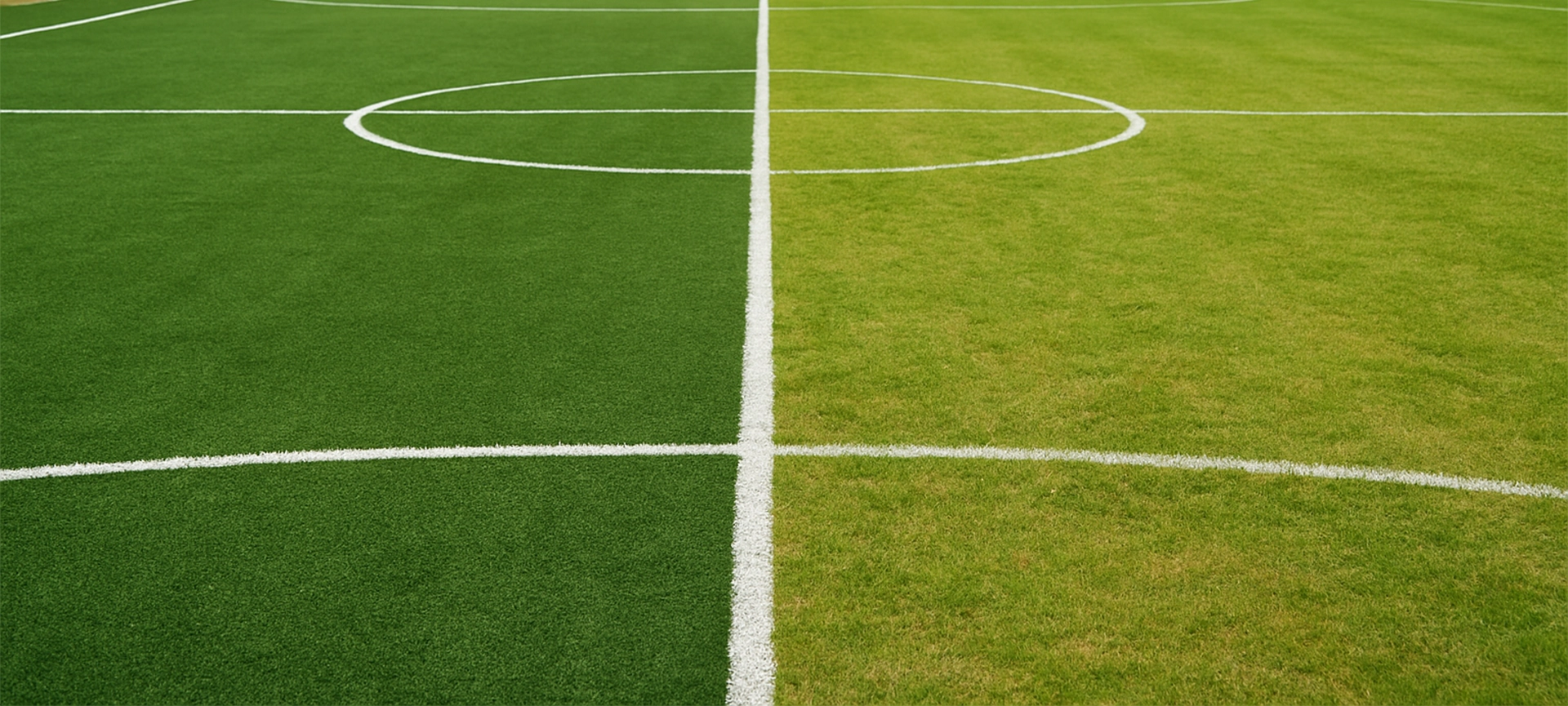
Artificial turf and natural grass solve different problems. Artificial turf is often chosen for high-use areas because it can handle repeated play without the same recovery time required by living grass.
Natural grass is often preferred for its softer feel, natural appearance, and cooler surface temperature during summer.
Here is a quick comparison:
| Factor | Artificial Turf | Natural Grass |
|---|---|---|
| Routine Maintenance | Lower, but still required | Higher and more frequent |
| Upfront Cost | Usually higher | Usually lower |
| Playability | Consistent and predictable | Natural but weather-sensitive |
| Weather Recovery | Faster with proper drainage | Slower after rain or heavy use |
| Heat Comfort | Can get hot in direct sun | Usually cooler |
| Long-Term Care | Cleaning, brushing, and infill checks | Mowing, watering, aeration, repairs |
| Best For | High-use sports spaces | Traditional play and natural landscapes |
Maintenance Needs
Maintenance is one of the biggest differences between the two surfaces.
Natural grass maintenance includes mowing, irrigation, fertilizing, weed control, aeration, overseeding, and patch repair. These tasks are essential because the surface changes with weather, foot traffic, and soil conditions.
If grass is overused without proper recovery, it can become thin, muddy, uneven, or unsafe.
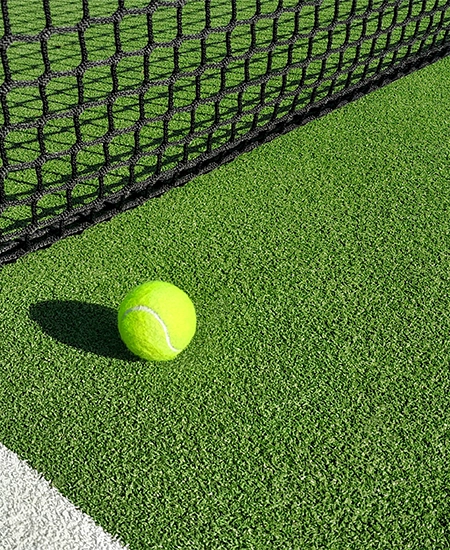
Artificial turf maintenance is different. It does not need to grow, but it does need to stay clean, even, and properly supported. Maintenance may include brushing the fibres, removing debris, redistributing infill, checking seams, and inspecting drainage.
Heavy-use areas may need more frequent attention because infill can shift and fibres can flatten.
Related Article: Synthetic Vs. Acrylic Sports Courts: A Cost and Performance Comparison
Cost Comparison
Artificial turf usually costs more to install. Natural grass often costs less upfront, but it may require more labour, water, and ongoing care. That means the cheaper option depends on how the surface will be used over several years.
For a private backyard area with moderate use, natural grass can be cost-effective if the owner already maintains the surrounding lawn. However, if the area receives constant play, grass may need frequent patching, watering, and rest periods. Those maintenance costs can add up.
Artificial turf has a higher installation cost because the system includes the surface material, base preparation, drainage layer, infill, and installation labour. However, it can reduce regular upkeep and allow more consistent use. This matters for schools, clubs, and community spaces that need reliable scheduling.
The long-term budget should include:
- Installation
- Base preparation
- Drainage work
- Regular maintenance
- Repairs
- Surface replacement
- Water use
- Labour requirements
- Downtime after rain or wear
Playability and Player Experience
Artificial turf provides a more predictable surface. Players can expect consistent footing and ball movement across the area when the system is installed and maintained correctly.
Natural grass has a more traditional feel. Many players prefer it because it is softer underfoot and usually cooler in summer. The challenge is that grass quality can vary across the surface. Shaded areas, worn zones, and poor drainage can create uneven play.
Poor grading can cause low spots, water pooling, and uneven wear. A well-prepared base improves drainage, surface stability, and player safety.
Drainage and Weather Performance
Ontario weather makes drainage a major factor in surface planning. Rain, snowmelt, humidity, freeze-thaw cycles, and summer heat can all affect performance.
Artificial turf can drain well when installed over a properly built base. Water moves through the turf system and into the drainage layer below. This can help reduce muddy conditions and allow faster return to play after rain.
Natural grass also needs proper drainage, but it depends on healthy soil and root structure. If soil becomes compacted, water may sit on the surface. Heavy use can also create low spots and worn areas that hold moisture. Over time, this can lead to slippery patches, turf loss, and uneven footing.
Heat and Comfort
Grass usually stays cooler because it contains moisture and benefits from natural cooling. Artificial turf can become hot in direct sunlight, especially during warm summer days.
This does not mean artificial turf is the wrong choice. It means scheduling and site planning matter. Shade, hydration, rest breaks, footwear, and surface selection can all improve comfort. For high-use facilities, these details should be part of the planning process.
Comfort also depends on shock absorption and surface condition. Natural grass can feel soft, but it can also become hard when dry or slippery when wet. Artificial turf can feel consistent, but compacted infill or worn fibres may affect comfort.
Related Article: Can Sports Surfaces Be Sustainable?
Which Surface Is Better For Schools and Sports Facilities?
Schools, clubs, and municipal facilities usually need surfaces that can handle heavy use. In these settings, artificial turf can be practical because it supports more frequent play and reduces downtime after rain when drainage is properly designed.
Natural grass can still be a strong choice for facilities with enough maintenance support, irrigation, and space to rotate usage. It may also be preferred where cooler surface temperature and traditional play feel are priorities.
Before choosing, facility managers should ask:
- How many hours per week will the surface be used?
- Will it support one sport or several?
- Is there a maintenance team available?
- Does the site drain properly?
- Is summer heat a major concern?
- What is the long-term replacement budget?
These answers help separate short-term cost from long-term value.
Related Article: Sports Court Landscaping: Where to Start?
Choosing the Right Surface For Long-Term Value
The best surface is the one that fits the site, sport, budget, and maintenance plan.
- Artificial turf is often the stronger choice for high-use areas that need reliable scheduling and reduced daily upkeep.
- Natural grass is often better for spaces where comfort, cooling, and natural appearance matter more.
The decision should start with a site assessment. A poor base can shorten the life of either surface, while proper preparation helps protect the investment.
Build a Better Sports Surface With CrowAll
Artificial turf and natural grass both have clear advantages. Artificial turf offers consistency, reduced daily upkeep, and strong availability for busy sports areas. Natural grass provides a cooler, familiar surface with a natural feel, but it needs regular care to perform well.
CrowAll helps homeowners, schools, clubs, and facility managers plan sports surfaces that suit the site and the way it will be used.
If you are comparing artificial turf vs. natural grass for a sports area in Ontario, contact CrowAll today to discuss the best option for your project.
Frequently Asked Questions
Is artificial turf cheaper than natural grass?
Artificial turf usually costs more to install, but it can reduce mowing, watering, and routine lawn care. Natural grass often costs less upfront, though maintenance can increase over time. The better value depends on use, labour, drainage, and replacement planning.
Does artificial turf need maintenance?
Yes. Artificial turf still needs brushing, debris removal, infill checks, seam inspections, and periodic cleaning. It does not need mowing or fertilizer, but maintenance keeps the fibres upright, supports drainage, and helps preserve safe, consistent play.
Is natural grass better for player comfort?
Natural grass is often cooler and softer underfoot, especially in hot weather. However, comfort depends on maintenance. Poorly kept grass can become hard, slippery, uneven, or muddy, which can reduce safety and affect how the surface performs.
Which surface is better after rain?
Artificial turf usually recovers faster after rain when installed over a proper drainage base. Natural grass can become muddy, soft, or slippery after wet weather. For both surfaces, grading and drainage are key to safe, reliable play.
Which surface is better for high-use sports areas?
Artificial turf is often better for high-use areas because it handles frequent play with less recovery time. Natural grass can work well too, but it needs strong maintenance support, proper irrigation, and enough rest between heavy-use periods.
How do I choose between artificial turf and natural grass?
Start with usage level, maintenance capacity, drainage, budget, and player comfort. Artificial turf suits high-use, low-mowing spaces. Natural grass suits cooler, traditional areas with proper care. A professional site review can help confirm the best choice.
The same tradeoff shows up outside of sport courts too. A backyard putting green installation almost always uses synthetic turf rather than real grass, for exactly the same maintenance reasons.
Once turf is the surface of choice, the next decision worth getting right is which infill material to use, since infill affects how hot the surface gets, how it drains, and how it feels underfoot.