Synthetic vs. Acrylic Sport Courts: A Cost and Performance Comparison
Choosing the right surface for a sports court affects how the court plays, how long it lasts, and how much maintenance it requires over time. For homeowners, schools, and community facilities in Ontario, two common choices are synthetic turf courts and acrylic sport courts.
Both surfaces support games such as tennis, basketball, and pickleball, but they differ in installation method, playing feel, and long-term cost. These differences help property owners select the surface that fits their goals, budget, and level of use.
What Is a Synthetic Sport Court?
Synthetic sport courts typically use artificial turf systems designed to mimic the feel of grass while maintaining a stable playing surface. These courts often include sand or rubber infill to create cushioning and improve traction.
Synthetic courts are commonly used for:
- Backyard tennis courts
- Multi-sport family courts
- Pickleball courts
- Recreational community courts
The turf fibres provide a softer playing experience compared with traditional hard courts. This cushioning reduces joint impact and can make longer play sessions more comfortable.
Another advantage is surface flexibility. Synthetic turf adapts well to multi-sport layouts because the turf system allows different line markings without major surface changes.
Related Article: How Much Does It Cost to Build a Tennis Court in 2026
How Acrylic Sport Courts Are Built
Acrylic sport courts are considered the standard surface for modern tennis and basketball courts. The system involves applying textured acrylic coatings over an asphalt or concrete base.
These coatings create a durable, hard court with predictable ball bounce and strong traction. Many professional and tournament courts use acrylic surfaces because they provide consistent performance.
Key features of acrylic sport courts include:
- Fast and consistent ball response
- Clear, durable colour coatings
- High traction for quick player movement
- Long-lasting surface when maintained properly
Acrylic courts rely on a solid foundation. Precision grading during construction helps ensure the court drains correctly and plays evenly. Professional installation methods, such as laser-guided grading, help achieve the correct slope and surface uniformity for long-term performance.
Surface Performance and Playing Experience
Performance is often the most important factor when comparing sports court surfaces.
Ball Speed and Bounce
Acrylic courts provide a faster and more consistent ball bounce. The hard surface allows the ball to rebound predictably, which supports competitive play.
Synthetic turf courts produce a slower bounce. The fibres and infill absorb some energy from the ball, creating a softer playing style that many recreational players prefer.
For tennis players who value precision and pace, acrylic courts usually perform better. For casual play or multi-sport use, synthetic turf can offer a more relaxed experience.
Player Comfort
Synthetic turf provides more cushioning underfoot. This reduces stress on knees and joints during long sessions.
Acrylic courts are firmer because the surface sits on asphalt or concrete. While the traction is excellent, the surface absorbs less impact.
For families, schools, or recreational players, the softer feel of synthetic turf may improve comfort during everyday play.
Multi-Sport Use
Synthetic courts are often easier to adapt for multiple activities. Turf systems allow line markings for different sports without affecting playability.
Acrylic courts can support several sports, but each marking must be applied directly to the surface. This can make the court appear crowded with lines.
Facilities that want a tennis and pickleball combination court often consider synthetic turf for this reason.
Installation Process and Construction
Installation methods differ significantly between the two surfaces.
Synthetic Turf Court Installation
Synthetic courts require several layers during construction:
- Compacted base layer
- Drainage layer
- Turf carpet installation
- Sand or rubber infill
- Line marking
The turf system must be installed evenly to prevent wrinkles or uneven bounce.
Acrylic Court Installation
Acrylic sport courts rely on a solid asphalt or concrete base. Once the base is installed and properly graded, the acrylic coating system is applied in layers.
Typical steps include:
- Base construction (asphalt or concrete)
- Surface cleaning and preparation
- Acrylic resurfacing layers
- Textured colour coatings
- Line striping
The grading stage is critical. Accurate levelling ensures proper drainage and consistent play across the court surface.
Cost Comparison Between Synthetic and Acrylic Courts
The overall cost of a sport court depends on size, base construction, site preparation, and location. However, general cost trends help illustrate the difference between the two surfaces.
| Feature | Synthetic Turf Court | Acrylic Sport Court |
|---|---|---|
| Typical Installation Cost | Medium to high | Medium |
| Base Requirement | Compacted base | Asphalt or concrete |
| Surface Materials | Turf + infill | Acrylic coatings |
| Long-Term Maintenance | Moderate | Low to moderate |
| Resurfacing Cycle | Turf replacement after several years | Resurface every 3–5 years |
Synthetic courts often have higher material costs because turf systems require specialized fibres and infill materials.
Acrylic courts typically cost less initially when built on an asphalt base, though resurfacing may be required periodically to maintain colour and traction.
Related Article: What’s the Lifespan of a Synthetic Running Track?
Maintenance Requirements
Maintenance needs also influence the long-term value of a sports court.
Synthetic Turf Maintenance
Synthetic courts require periodic upkeep to maintain the playing surface.
Common maintenance tasks include:
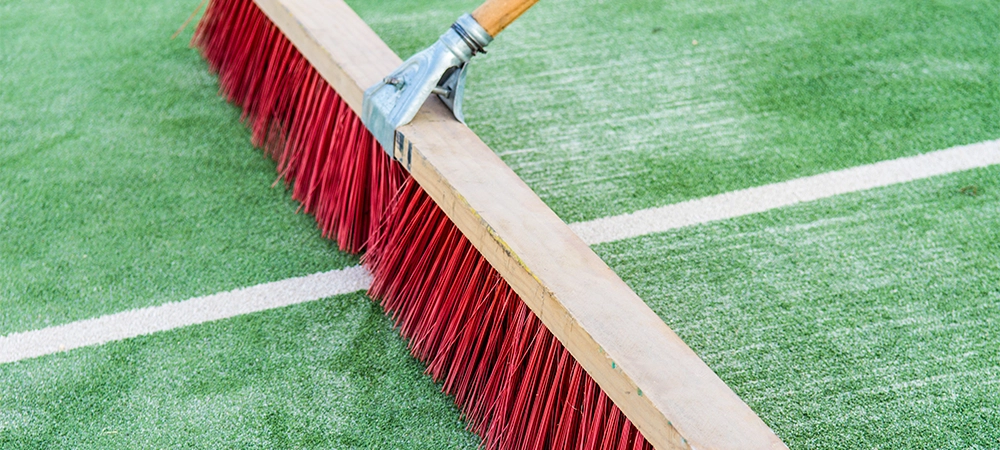
- Brushing the turf fibres
- Replenishing infill material
- Removing debris and organic buildup
- Inspecting seams and edges
Over time, turf fibres can wear down due to heavy use or weather exposure. When this occurs, the surface may require partial or full replacement.
Related Article: Tennis Court Maintenance Vs. Replacement: When to Repair and When to Invest
Acrylic Court Maintenance
Acrylic courts are easier to maintain on a day-to-day basis.
Typical maintenance includes:
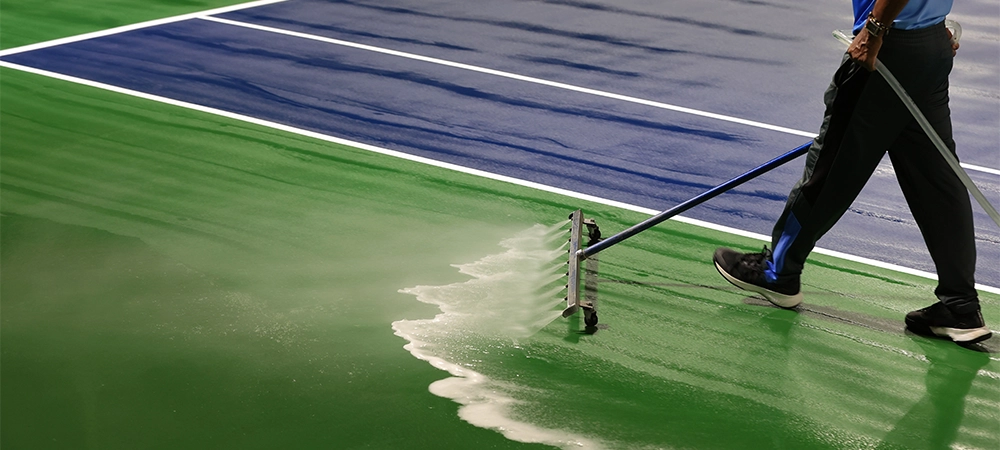
- Pressure washing the surface
- Filling small cracks in the base
- Repainting lines when needed
- Applying resurfacing coatings every few years
Regular resurfacing improves traction, restores colour, and extends the life of the court.
Resurfacing also improves safety by eliminating cracks or surface defects that could create trip hazards.
Durability and Lifespan
The durability of a sports court depends on installation quality, usage levels, and climate conditions.
Acrylic courts tend to last longer structurally because the hard base remains stable for many years. Surface coatings can be refreshed without replacing the entire court.
Synthetic turf courts may require replacement sooner because turf fibres gradually degrade from UV exposure and repeated play.
However, synthetic systems handle minor ground movement well because the flexible turf layer absorbs small shifts.
In colder climates like Ontario, both surfaces perform well when installed with proper drainage and grading.
Which Surface Is Best for Your Property?
The best choice depends on how the court will be used.
Synthetic turf courts are ideal for:
- Backyard family courts
- Multi-sport recreational spaces
- Players seeking softer surfaces
- Casual tennis or pickleball games
Acrylic sport courts are ideal for:
- Competitive tennis courts
- Schools and sports facilities
- Basketball and pickleball courts
- Players who want consistent bounce and speed
Property owners who value performance and tournament-style play usually choose acrylic surfaces. Those focused on comfort and versatility often prefer synthetic turf.
Choosing the Right Surface for Long-Term Play
Synthetic and acrylic sport courts both offer reliable playing surfaces, but they serve different priorities.
When planning a new sports court, consider how the court will be used, how often it will be played on, and how much maintenance you are comfortable managing. With the right surface and expert installation, a well-built sport court can provide years of reliable performance and enjoyment.
If you are planning a tennis, pickleball, or multi-sport court in Ontario, Crowall can help evaluate your space and recommend the best surface for your project. Contact us today.
Frequently Asked Questions
Which surface is better for tennis?
Acrylic courts are generally preferred for tennis because they provide consistent bounce and speed similar to professional hard courts. Synthetic courts are suitable for casual tennis but usually produce a slower ball response.
Are synthetic turf sport courts more comfortable to play on?
Yes. Synthetic turf courts offer more cushioning, which reduces impact on joints and muscles. This makes them comfortable for recreational players and families who plan to use the court frequently.
How often do acrylic sport courts need resurfacing?
Most acrylic courts require resurfacing every three to five years, depending on usage and weather exposure. Regular resurfacing restores traction, colour, and surface texture.
Do synthetic sport courts require more maintenance?
Synthetic turf courts require periodic brushing, debris removal, and infill adjustment. Acrylic courts require less routine maintenance but may need resurfacing coatings after several years.
Which sports court surface lasts longer?
Acrylic courts typically last longer structurally because the base remains intact while the surface coatings can be renewed. Synthetic turf courts may require full turf replacement once the fibres wear out.
Does resurfacing let me change the court’s color?
Yes. Since an acrylic recoat strips and reapplies the finish coats anyway, it’s a natural point to change the color scheme entirely rather than just refreshing what’s already there; CrowAll’s sport court color guide covers how that decision is made.