
Tennis Court Maintenance vs. Replacement: When to Repair and When to Invest
A tennis court is a long-term asset. With proper care, it can serve players for decades. The real question is not whether wear will happen, but when repair makes sense and when full replacement becomes the smarter financial decision.
Understanding the difference protects your investment, ensures player safety, and preserves performance standards.
Related Article: How Much Does It Cost to Build a Tennis Court in 2026
Why Tennis Court Maintenance Matters
Routine maintenance protects both surface integrity and player safety. Small cracks, low spots, and coating wear may seem minor at first, but they can escalate into structural damage.
For hard courts such as asphalt or concrete, resurfacing is typically recommended every three to five years. Clay courts often require more frequent attention, while rubberized systems can last longer with proper care.
Regular maintenance delivers:
- Improved traction and ball response
- Reduced trip hazards
- Extended surface lifespan
- Enhanced drainage performance
- Lower long-term repair costs
When maintenance is consistent, replacement can often be delayed by many years.
Related Article: Can Sports Surfaces Be Sustainable?

Common Signs Your Court Needs Repair
Not every issue calls for full reconstruction. Many surface problems can be corrected with targeted repair or resurfacing.
Surface Cracks
Hairline cracks are common in asphalt courts. These usually form due to seasonal freeze-thaw cycles and surface aging. If caught early, crack filling and resurfacing can restore performance.
However, structural cracking that reflects base movement signals deeper issues.
Low Spots and Drainage Issues
Water pooling after rainfall indicates grading problems. Standing water weakens the surface and accelerates coating failure. Minor drainage concerns may be corrected through patching and surface levelling.
Persistent drainage failures often point to sub-base problems.
Fading or Worn Acrylic Coating
Acrylic coatings wear down over time. When colour fades and texture smooths out, traction decreases. Resurfacing with fresh coatings restores grip and visual appeal.
Surface Bubbles or Delamination
Bubbling suggests moisture infiltration beneath the surface layer. Small areas can be repaired, but widespread delamination may require more extensive reconstruction.

When Resurfacing Is the Right Choice
Resurfacing is ideal when the court structure remains stable and damage is primarily cosmetic or surface-level.
Typical resurfacing includes:
- Crack repair
- Patching low spots
- Applying new acrylic coatings
- Repainting lines
For most Ontario hard courts, resurfacing every three to five years maintains professional-grade playability.
Resurfacing offers:
- Lower upfront cost than replacement
- Minimal downtime
- Restored play speed and traction
- Extended court life
If the base remains intact and drainage functions properly, resurfacing is usually the most cost-effective solution.
When Replacement Becomes Necessary
Replacement becomes the better investment when structural failure affects performance and safety.
Severe Structural Cracking
Large cracks that reopen after repair often indicate base movement. When the foundation shifts, surface repairs become temporary fixes.
Sub-Base Failure
A tennis court is only as strong as its foundation. Poor compaction, erosion, or improper grading can cause sinking, heaving, or uneven bounce. At this stage, patchwork repairs will not solve the underlying issue.
Chronic Drainage Problems
If water consistently pools in multiple areas, the court slope may be incorrect. Proper slope and grading are critical to prevent premature deterioration.
Professional contractors use precision laser-guided grading systems to ensure accurate slope and surface uniformity. This approach improves drainage and long-term performance
Repeated Repair Cycles
If you are resurfacing every one to two years due to recurring damage, replacement may provide better long-term value.

Comparing Costs: Repair Vs. Replacement
Understanding cost over time is essential.
Maintenance and Resurfacing
- Lower immediate expense
- Extends lifespan by several years
- Best for structurally sound courts
Full Reconstruction
- Higher upfront investment
- Corrects foundation and drainage issues
- Provides 20+ years of reliable performance when properly built
While replacement costs more initially, repeated short-term repairs can exceed reconstruction expenses over a decade.
Surface Type Affects the Decision
Different tennis court materials respond differently to climate, usage levels, and maintenance routines. Surface composition directly affects crack resistance, drainage performance, and long-term durability.
When deciding between repair and replacement, understanding your surface type is critical.
Asphalt Hard Courts
Asphalt remains one of the most common hard court bases across Ontario due to cost efficiency and solid play performance. However, it is more vulnerable to freeze-thaw cycles. Temperature swings cause expansion and contraction, which often leads to surface cracking over time.
Most asphalt courts require resurfacing every three to five years to maintain traction and visual clarity. Crack filling and acrylic coating systems help slow deterioration, but once structural cracks reflect base instability, resurfacing becomes a short-term fix.
In older installations, repeated crack patterns may signal the need for reconstruction.
Concrete Courts
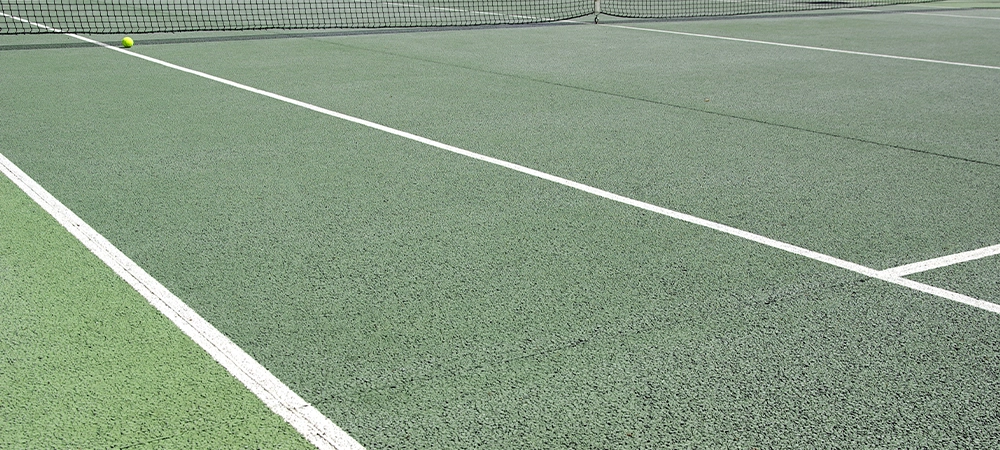
Concrete offers greater structural stability than asphalt. It resists deformation and typically develops fewer structural cracks. However, surface coatings still wear down under UV exposure and heavy play.
Although concrete courts require less frequent structural repair, when major cracking or shifting occurs, repairs can be more complex and costly. Surface coating renewal remains necessary to maintain grip and consistent ball response.
Proper drainage and grading at installation significantly reduce long-term issues.

Clay Courts
Clay courts demand the most active maintenance schedule. Regular grooming, rolling, watering, and line care are essential to preserve surface consistency. Weather conditions directly influence performance, particularly during heavy rain or dry heat.
While full structural replacement is less common, surface rebuilding may be required every one to three years, depending on usage. Owners must factor in labour intensity and seasonal maintenance costs when evaluating long-term investment decisions.

Synthetic and Rubberized Systems
Synthetic turf and cushioned rubberized systems provide enhanced shock absorption and player comfort. These surfaces often last five to ten years before major resurfacing becomes necessary.
However, cushion layers can compress over time, reducing performance and comfort. UV exposure may also degrade surface fibres or binders. When cushion systems fail, partial repair is often limited, making full surface replacement more practical.
Selecting the appropriate material during reconstruction can significantly reduce maintenance demands and lifecycle costs. Climate compatibility, expected usage volume, and drainage design should guide that decision.
Related Article: What’s the Lifespan of a Synthetic Running Track?
The Role of Proper Construction
Many replacement decisions stem from poor original installation. Accurate grading, compaction, and slope are critical.
Laser-guided grading improves precision, ensuring proper drainage and uniform bounce. When courts are built to professional standards, they resist premature cracking and uneven wear
If your existing court was constructed without advanced grading methods, upgrading during replacement can dramatically improve longevity.
How to Evaluate Your Court Today
Before deciding, conduct a structured assessment:
- Inspect for recurring cracks.
- Check for standing water after rain.
- Evaluate surface texture and traction.
- Assess bounce consistency across the court.
- Review maintenance history over the past five years.
If issues are cosmetic and isolated, resurfacing likely suffices. If problems are structural and recurring, replacement deserves serious consideration.
Related Article: How to Tell When It’s Time to Resurface Your Tennis Court
Why Professional Assessment Matters
Tennis courts are specialized surfaces. Surface damage may look minor while deeper foundation issues develop underneath.
Working with an experienced sports surface contractor like CrowAll ensures:
- Accurate structural diagnosis
- Drainage evaluation
- Cost comparison analysis
- Material upgrade options
- Long-term maintenance planning
A professional evaluation from the CrowAll team prevents unnecessary spending and avoids short-term fixes that fail prematurely.
Making the Smart Investment for Long-Term Performance
Tennis court maintenance protects your surface. Replacement protects your long-term investment. The right choice depends on structural integrity, drainage performance, and total lifecycle cost.
If your court remains structurally sound, resurfacing can restore playability at a fraction of reconstruction cost. If the base has failed or drainage problems persist, rebuilding ensures decades of reliable performance.
CrowAll specializes in professional tennis court resurfacing and full installation across Ontario. With precision laser-guided grading and high-performance materials, every project is built for durability and safety
Book a professional evaluation today and protect your court before minor damage becomes a major expense.
Frequently Asked Questions
How often should a tennis court be resurfaced?
Hard courts typically require resurfacing every three to five years. Climate, usage level, and maintenance frequency influence timing.
Can cracks always be repaired?
Small surface cracks can be repaired. Structural cracks caused by base movement often require deeper reconstruction.
How long does a tennis court replacement take?
Full reconstruction may take several weeks, depending on weather, material selection, and curing time.
Is replacement always more expensive?
Upfront costs are higher, but replacement may reduce long-term repair expenses if structural problems are ongoing.
Does climate affect court lifespan?
Yes. Freeze-thaw cycles, heavy rainfall, and temperature swings accelerate wear on asphalt and acrylic surfaces.
Can drainage problems be fixed without replacement?
Minor grading adjustments may help. Chronic slope or sub-base issues often require reconstruction.