How Long Does a Tennis Court Construction Take?
Building a tennis court takes time, but not for the reasons most people assume. It is less about the installation itself and more about preparation, curing, and ensuring every layer performs as it should.
In most cases, a standard tennis court takes 4 to 8 weeks to complete. The timeline stays within this range when the site is straightforward, weather conditions are stable, and the work is handled by experienced contractors like CrowAll Surface Contractors Ltd.
Related Article: How Much Does It Cost to Build a Tennis Court in 2026
What Does the Full Timeline Actually Look Like?
A tennis court is built in layers, and each phase has its own timeframe. Some stages move quickly, while others require waiting time that cannot be rushed.
Here is a realistic overview:
- Week 1–2: Site preparation and excavation
- Week 2–4: Base installation and compaction
- Week 4–6: Surface installation and curing
- Week 6–8: Coating, markings, and finishing
This structure helps set expectations, but it is only accurate when each step is completed properly.
Where the Time Really Goes
The biggest misconception is that construction itself takes weeks. In reality, a lot of time is spent ensuring the court performs correctly after it is finished.
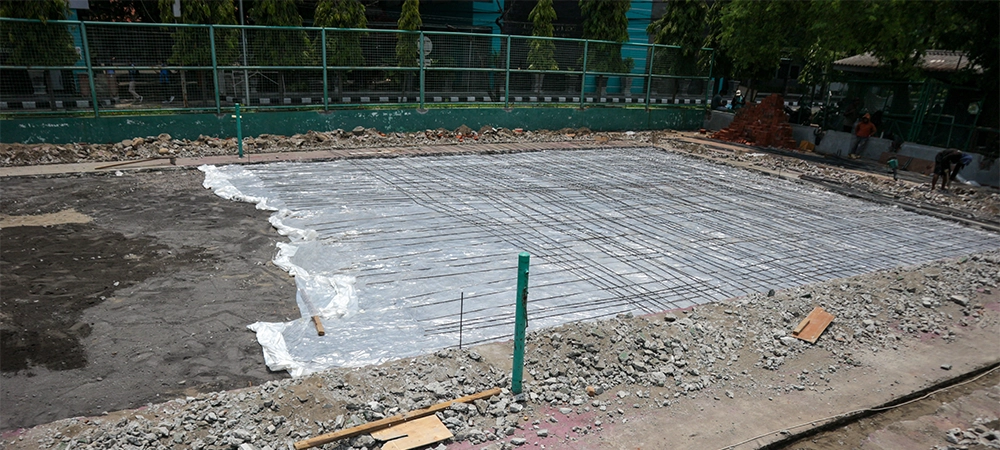
1. Site Preparation Is More Than Clearing Land
This phase usually takes 5 to 10 days, but it can stretch depending on the condition of the site.
Work typically includes:
- Removing vegetation and debris
- Excavating to the correct depth
- Creating a precise slope for drainage
This is where accuracy matters most. Even minor grading issues can lead to water pooling or uneven play. That is why professional teams rely on precision methods like laser-guided grading to get consistent results from the start.
2. The Base Determines How Long the Court Lasts
Once the site is prepared, the base is installed over 7 to 10 days.
This stage involves:
- Layering crushed stone or aggregate
- Compacting each layer thoroughly
- Levelling the surface before paving
It may seem repetitive, but each pass of compaction strengthens the structure. Skipping or rushing this stage is one of the main reasons courts fail early.
3. Surface Installation Is Quick, But Curing Is Not
Installing asphalt or concrete is relatively fast. What takes time is allowing the surface to cure properly.
Typical timelines:
- Asphalt:
- Installation: 1 to 2 days
- Curing: 7 to 14 days
- Concrete:
- Installation: 2 to 3 days
- Curing: up to 28 days
This waiting period is essential. Applying coatings too early can lead to peeling, cracking, or poor surface performance.
Related Article: Synthetic Vs. Acrylic Sports Courts: A Cost and Performance Comparison
4. Coatings and Markings Complete the Court
After curing, the court is finished with acrylic coatings. This stage usually takes 5 to 7 days.
The process includes:
- Applying multiple coating layers
- Allowing drying time between each layer
- Adding line markings and final details
These coatings are not just cosmetic. They improve traction, control ball response, and make the surface safer to play on.
5. Final Checks Before Play
Before handover, the court is inspected to ensure everything meets performance standards.
Contractors typically check:
- Surface consistency and level
- Accuracy of line markings
- Drainage performance after testing
At this point, the court is ready for use after a short settling period.
What Can Change the Timeline?
Even with a clear plan, several factors can affect how long construction takes.
Weather Conditions
Weather can slow progress at multiple stages:
- Rain delays excavation and base work
- Cold temperatures extend curing time
- Humidity affects coating application
A project can easily extend by one to two weeks if conditions are not ideal.
Site Condition
Not all sites are equal. A clean, level area is quick to prepare, while a challenging site requires more work upfront.
Common issues include:
- Sloped or uneven terrain
- Poor soil stability
- Limited access for equipment
Each of these adds time before construction can move forward.
Surface Type
The material you choose plays a major role in the timeline:
- Asphalt courts are faster to complete
- Concrete courts take longer due to curing
- Clay and synthetic systems require additional preparation
Choosing the right surface is a balance between speed, durability, and maintenance.
Added Features
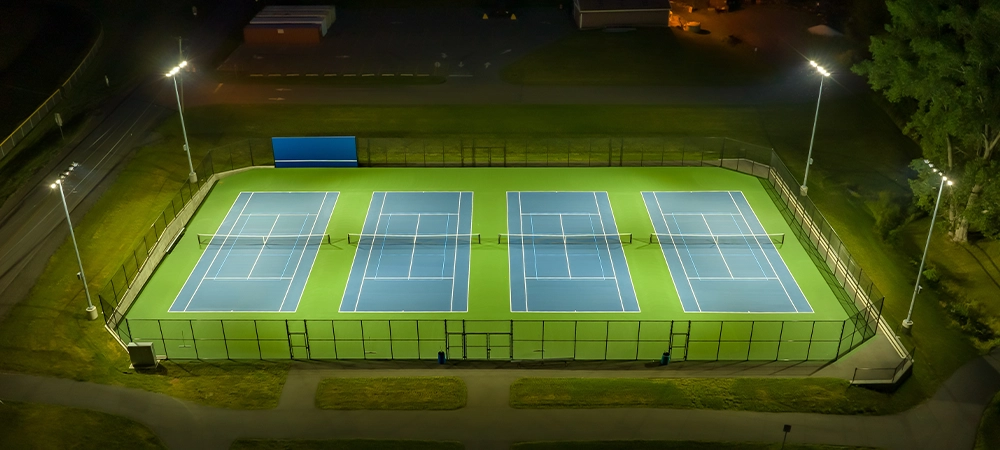
Custom elements extend the timeline. These may include:
- Fencing systems
- Court lighting
- Multi-sport layouts
- Landscaping around the court
Each addition requires coordination and installation time.
How Long Does Resurfacing Take Instead?
If the structure of the court is still in good condition, resurfacing is a much faster option. Most resurfacing projects take 3 to 7 days, depending on the level of repair needed.
Typical steps include:
- Cleaning and preparing the surface
- Repairing cracks or minor damage
- Applying new acrylic coatings
This process restores playability and extends the life of the court without full reconstruction.
Related Article: Tennis Court Maintenance Vs. Replacement: When to Repair and When to Invest
Can You Speed Up Tennis Court Construction?
There are ways to keep the project efficient, but not every step should be accelerated.
You can reduce delays by:
- Starting during dry, stable weather
- Choosing faster-curing materials like asphalt
- Ensuring the site is accessible before work begins
However, some steps must take their time. Curing and compaction cannot be rushed without compromising the final result.
Why a Realistic Timeline Matters
A tennis court is expected to perform consistently for years. That only happens when the construction process is done properly from the ground up.
Taking the time to complete each phase ensures:
- Consistent ball bounce
- Reliable traction
- Proper drainage
- Fewer long-term repairs
Working with experienced professionals like CrowAll Surface Contractors Ltd. helps ensure the project stays on schedule without sacrificing quality.
Planning Your Project the Right Way
If you are considering building a tennis court, the best starting point is a proper site assessment. This allows you to understand realistic timelines based on your specific conditions rather than relying on general estimates.
A clear plan from the start helps avoid delays, control costs, and ensure the final result performs exactly as expected.
Ready to Get a Clear Timeline for Your Project?
Every site is different, and the only way to get an accurate timeline is through a proper assessment. A professional evaluation helps identify potential delays early and keeps your project running smoothly from start to finish.
Call us today or book free consultation to get more details on the tennis court construction timeline.
Frequently Asked Questions
How soon can you use the court after completion?
Most courts are ready within one to two weeks after final coatings, depending on drying conditions.
What is the most time-consuming stage?
Curing is usually the longest stage and cannot be shortened without risking damage.
Does weather always cause delays?
Not always, but poor conditions can slow multiple stages of the project.
Is asphalt always faster than concrete?
Yes. Asphalt has a shorter curing time, which helps reduce the overall timeline.
How often will the court need resurfacing?
Hard courts typically require resurfacing every 3 to 5 years, depending on usage.
Can you build multiple courts at once?
Yes, but larger projects require more coordination and may extend the timeline.
Is resurfacing enough for older courts?
If the base is still stable, resurfacing is usually sufficient. If not, reconstruction may be required.