School’s Out Next Week: Is Your Sports Court Safe for Summer Play?
Summer changes how a sports court gets used. Once school finishes, courts that were quiet during the day can suddenly see morning games, afternoon lessons, evening rallies, and weekend family play.
That extra use is great when the surface is ready. It becomes a problem when cracks, soft spots, poor drainage, faded lines, or slippery areas have been ignored through spring. A court can look fine from a distance and still create trip risks, bad bounce, and avoidable wear once regular summer play begins.
For homeowners, schools, clubs, and community facilities, this is the right time to inspect the surface before the schedule fills up.
Related Article: Best Time of Year to Start Building Sports Courts
Why a Pre-Summer Court Check Matters
A sports court safety check helps spot small problems before they interrupt the season. It also helps owners decide whether the court needs cleaning, crack repair, line repainting, drainage correction, or full sports court resurfacing.
The goal is a court that is safer, easier to use, and ready.
A good inspection should look at:
- Cracks that can catch feet or widen under heat
- Low areas where water sits after rain
- Loose coating, bubbles, or peeling acrylic
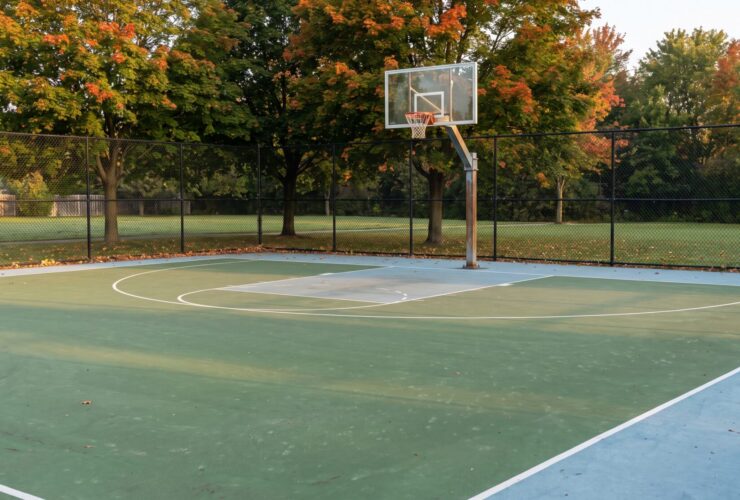
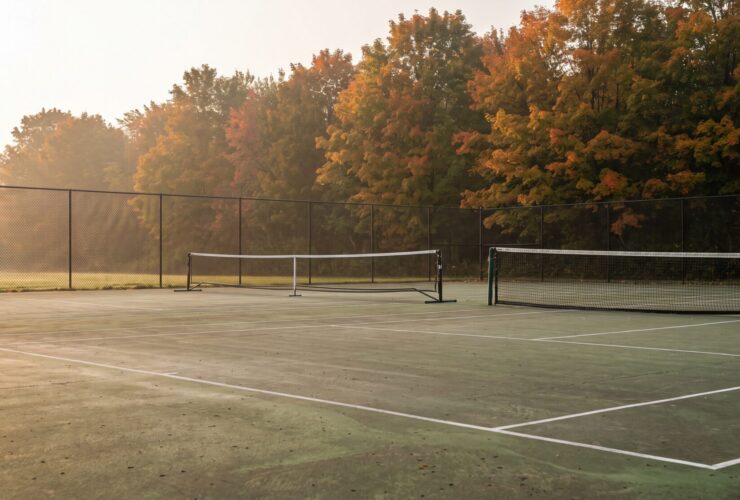
- Faded tennis, basketball, or pickleball lines
- Surface texture that feels too smooth or too rough
- Edges, fencing, gates, and access points
- Net posts, hoops, and anchor points
These details matter because summer damage can move quickly. Heat, rain, and frequent play can turn a minor surface flaw into a larger repair.
Related Article: 5 Signs You Need Tennis Court Resurfacing Before the Heat Hits
Cracks Are More Than a Cosmetic Issue
Cracks are one of the clearest signs a court needs attention. Some are thin and shallow, while others show movement below the surface. Either way, they should be checked before summer use.
On a tennis court, cracks can affect footwork and ball response. On a basketball court, they can interrupt quick changes in direction. On a pickleball court, even a small raised edge can affect balance because the game involves short steps, quick pivots, and fast reactions near the kitchen line.
Cracks can also allow water into the base. Once water enters and temperature changes add pressure, the crack can widen. That creates more work later and can shorten the life of the court.
Drainage Problems Show Up After Spring Rain
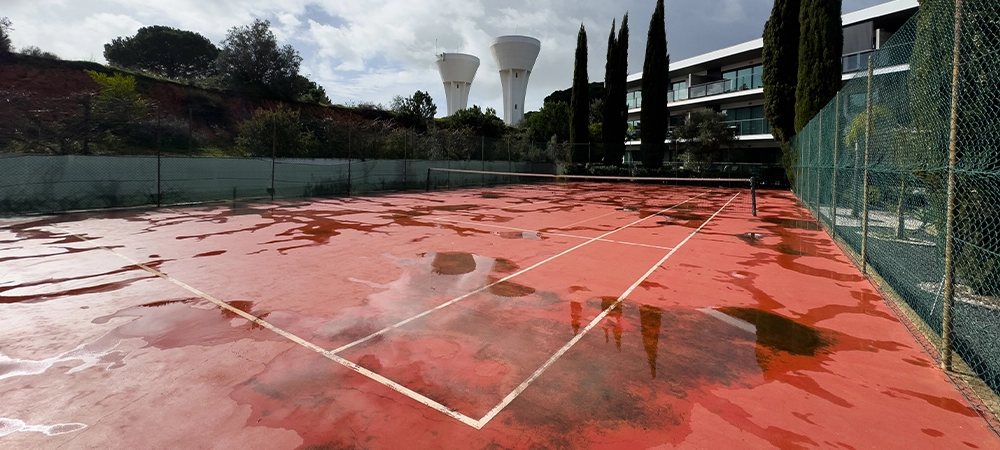
Standing water is a warning sign. Puddles can leave dirt, algae, staining, and slick areas behind. They can also speed up surface breakdown, especially in low spots where water sits longer than it should.
A safe sports court should shed water in a controlled way. That depends on correct grading, surface condition, and a sound base. CrowAll uses precision laser-guided grading for sports court construction, which helps create a consistent slope for drainage and playability.
When water keeps returning to the same area, cleaning alone leaves the real issue in place. The court may need repair, resurfacing, or a closer look at the grade beneath the surface.
Worn Texture Can Make Movement Less Predictable
The texture of a sports court affects grip, speed, and player confidence. A surface that is too smooth can feel slippery, especially after rain or when dust and pollen settle. A surface that is too rough can be hard on shoes, knees, and hands during falls.
Acrylic coatings help create traction and a consistent finish on hard courts. Over time, the coating wears down from foot traffic, weather, equipment, and cleaning. This can leave shiny patches, rough patches, or uneven areas across the court.
The issue often appears in high-use zones first:
- Baselines on tennis courts
- The key and three-point area on basketball courts
- Kitchen lines and service boxes on pickleball courts
- Entry points where players drag dirt onto the surface
If players are slipping, avoiding certain spots, or complaining about uneven bounce, the court needs more than a quick wash.
Faded Lines Can Create Confusion and Unsafe Play
Clear court lines are part of safe play. Players rely on them to judge movement, spacing, serves, shots, and boundaries. When lines fade, games become slower, more frustrating, and less organized.
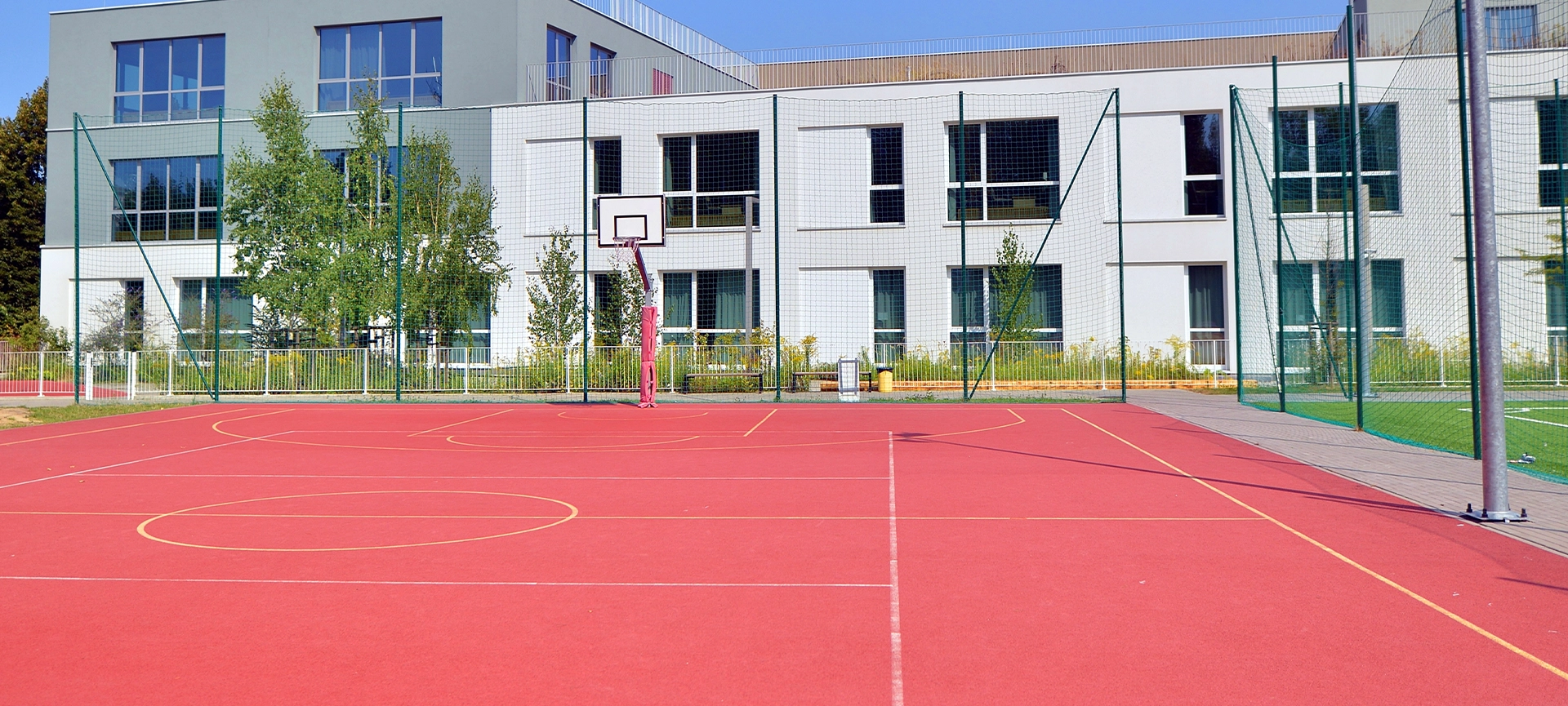
Faded markings are common after sun exposure and regular use. Multi-use courts can become even harder to read when tennis, basketball, and pickleball markings overlap or lose contrast.
Before summer programs or family play begin, check whether every line is easy to see from normal playing distance. If players need to stop and guess, the markings need attention.
Related Article: Why Proactive Sports Court Maintenance Saves Thousands Vs. Costly Repairs
Small Repairs Can Help Avoid Bigger Summer Disruptions
Many court problems start small. A crack expands. A low spot holds more water. A peeling patch spreads. A faded line disappears. By the middle of summer, the court may need to be closed when people want to use it most.
A pre-summer repair plan may include:
- Cleaning dirt, leaves, pollen, and organic buildup
- Filling cracks before they widen
- Correcting low spots or drainage concerns
- Resurfacing worn acrylic coatings
- Repainting clear game lines
- Reviewing posts, hoops, fencing, and access areas
When Resurfacing Is the Better Option
Repair is useful when the court has isolated issues. Resurfacing is usually the better choice when wear is spread across the surface.
A court may be ready for resurfacing if it has several cracks, fading colour, slippery areas, poor ball response, or coating failure. Resurfacing can improve playability, safety, drainage, and appearance.
CrowAll works on tennis courts, basketball courts, pickleball courts, and multi-use sports surfaces across Ontario. The right plan depends on the court’s age, base condition, use level, and current surface damage.
Get the Court Ready
A sports court should feel safe before summer play begins. If your court has visible wear, poor drainage, fading lines, or uneven areas, schedule a professional inspection before summer use gets heavier.
CrowAll can assess the court, explain the repair or resurfacing options, and help prepare your tennis, basketball, pickleball, or multi-use court for safe summer play now.
If summer evenings are when your court gets the most use, it’s worth checking that lighting is part of that same safety conversation. CrowAll’s guide to sport court lighting in Ontario covers how much light a court needs and how to avoid the glare and dark corners that make evening play riskier than it should be.
Frequently Asked Questions
How do I know if my sports court is unsafe for summer play?
Look for cracks, raised edges, standing water, peeling coating, slippery patches, faded lines, and uneven bounce. If players are changing direction to avoid certain spots, the court should get a professional inspection before the court gets regular summer use again.
What areas of a court should be checked first before summer use?
Start with baselines, key areas, service boxes, entry points, fence lines, net posts, and spots where water collects. These areas take the most wear and often reveal traction loss, surface movement, loose hardware, or early drainage problems before use increases.
How often should a tennis or sports court be resurfaced?
Hard courts often need resurfacing every three to five years, depending on weather, use, maintenance, and original installation quality. Heavy-use school, club, or backyard courts may need attention sooner if cracks, fading, or slippery areas appear during regular summer play.
Can pickleball lines be added during resurfacing?
Yes, pickleball lines can often be added during resurfacing if the court size and layout allow it. This is a practical time to refresh tennis or basketball markings and create a clearer multi-use sports surface for summer games or camps.
Why should drainage be checked before summer play?
Poor drainage leaves puddles, slick spots, dirt, algae, and stains on the surface. Water can also worsen cracks and coating damage. A properly graded court dries faster and gives players a safer, more reliable surface after rain and frequent use.