
Sport Court Landscaping: Where to Start?
Designing a sports court is more than deciding what game lines to paint. The success of your project depends on the groundwork. The right grading, materials, and landscaping details determine how safe, durable, and playable your surface will be.
Whether you want a backyard pickleball court, a full community tennis complex, or something lower-key like a shuffleboard court, a smart sport court landscaping plan sets the foundation for long-term performance.
Evaluate Your Site First
The first step is a site evaluation. The land must be stable, level, and accessible. Sloping ground, poor soil quality, or low-lying areas can all lead to water retention and uneven play later on.
Start by identifying your boundaries and measuring available space. You’ll need more than just the playing area — allow extra room for fencing, access paths, and spectator seating if desired. CrowAll uses laser-guided grading equipment to analyze slope, soil depth, and compaction. This ensures the site can properly support the structure and drainage design.
A north–south court orientation is ideal, as it minimizes glare during early morning and late-day play. Good positioning also reduces wind interference if your property allows.
Related Article: Business Plan Basics: Opening a Profitable Pickleball Club from the Ground Up
Establish Your Base and Drainage Design
A level surface is crucial, but perfect flatness isn’t the goal; controlled slope is. Without it, even minor puddling after rain can weaken coatings and reduce traction.
Proper grading and drainage prevent water damage, cracking, and frost heaving during Ontario’s freeze-thaw seasons. Laser-guided grading enables millimetre-precise slope creation so that water runs off evenly across the surface.
Drainage channels or French drains can be placed around the perimeter to move water away quickly. If your court sits near landscaped zones, integrating swales or gravel borders can redirect runoff while keeping your court dry. CrowAll often combines this with durable base layering (crushed stone compacted to specification) before asphalt or concrete is poured.
A well-graded court surface doesn’t just drain better. It improves playability, ensures consistent ball bounce, and reduces long-term repair costs.
Choose the Right Court Surface
Your surface material determines how the court feels, performs, and lasts. Here’s a breakdown of the most popular options:
- Asphalt: Affordable, durable, and perfect for multi-sport courts. It can be coated with acrylic for extra traction and custom colour.
- Concrete: The most long-lasting material. Requires precision installation but offers an excellent foundation for acrylic or cushioned systems.
- Acrylic Coatings: Ideal for tennis, pickleball, and basketball. Available in various textures to adjust grip and ball speed.
- Clay or Shale: Favoured by traditionalists. Offers slower ball movement but demands frequent grooming and moisture control.
- Synthetic Turf: Feels like grass with less maintenance—great for families or recreational setups.
- Rubber or Cushioned Surfaces: Softer underfoot, providing impact absorption that benefits younger players and joint health.
If your court will see varied use—say, tennis on weekends and basketball during the week—a hard court with acrylic coating is often best. CrowAll tailors the build to the sport and player preference, from speed and colour to underlay cushioning.
Related Article: The Role of Acrylic Sports Court Coating in Enhancing Durability and Aesthetics

Integrate Your Court into the Landscape
A sports court doesn’t have to look industrial. Landscaping around it enhances safety and visual appeal.
Low-growing plants, stone edging, and retaining walls can define boundaries without blocking sightlines. Native plants are ideal—they’re hardy, drought-tolerant, and require little upkeep. Choose grass species or ground covers that resist compaction near play areas.
If you want evening play, LED perimeter lighting is a smart upgrade. It improves visibility without creating glare. Position lights at safe distances so fixtures don’t interfere with movement or shots.
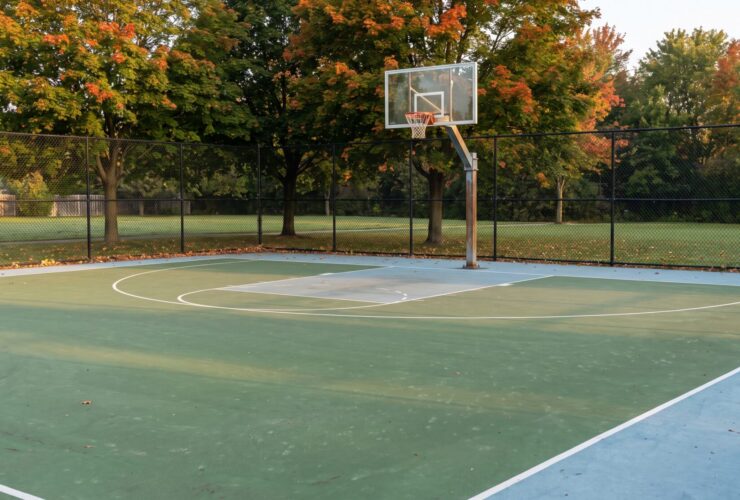
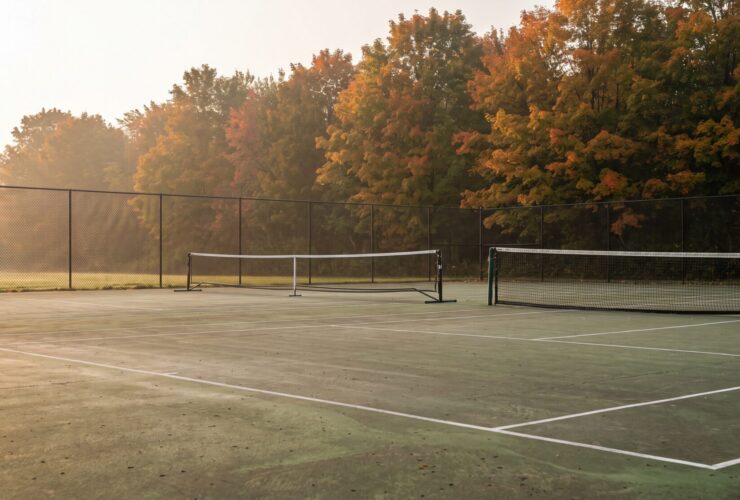
Avoid large trees near the surface. Root systems can push through asphalt or concrete, and falling leaves or sap create extra maintenance. Instead, consider small shrubs or ornamental grasses for surrounding zones.
Think Beyond the Court Lines
The most enjoyable courts go beyond basic play space. Consider functionality and comfort from the start.
Add benches or shaded seating, especially if multiple players will rotate. Include equipment storage for rackets, nets, or balls to keep the surface clutter-free.
For pickleball or tennis, windscreens reduce distractions and improve consistency. If the court doubles as a community space, add a rebound wall or basketball hoop for multi-use play. Accessibility features like wider entry paths and non-slip finishes make the court safer for all ages.
A backyard putting green installation is another popular addition for properties with room to spare, adding a low-maintenance feature that appeals to non-athletes in the household too.
Every addition should serve a purpose—whether it’s protection, comfort, or aesthetics.
Plan for Ontario Weather
Ontario’s seasonal extremes make material choice and preparation even more important. Freeze-thaw cycles expand and contract surfaces repeatedly. Without flexibility in the design, small cracks quickly spread.
CrowAll’s resurfacing systems use materials engineered to handle thermal movement while maintaining traction. A cushioned acrylic system can absorb temperature shifts and reduce stress fractures.
Proper sub-base drainage prevents frost from lifting or heaving the surface. Edge seals and crack fillers help maintain surface integrity during winter.
For outdoor courts, seasonal care is simple: clean debris in autumn, remove snow gently in winter, and pressure wash in spring. Keeping the surface clean protects coatings and prevents algae growth that can make the court slippery.
Related Article: Are There Any Special Considerations for Weather-Resistant Sports Courts?
Understand Maintenance and Resurfacing Needs
Even the best-built court requires periodic attention. Over time, UV exposure and weather gradually dull colours and reduce grip. Resurfacing restores both aesthetics and safety.
Here’s what most homeowners and facility managers can expect:
- Hard courts (asphalt/concrete): Resurface every 3–5 years
- Clay or shale courts: Rebuild the top layer every 1–3 years
- Rubberized or synthetic systems: Renew coating every 5–10 years
Between resurfacing cycles, inspect your court each spring. Look for minor cracks, bubbles, or worn line paint. Addressing small issues early saves major costs later. CrowAll offers maintenance plans to monitor surface health and recommend repairs before they escalate.
Budgeting and Project Timeline
A realistic budget ensures you get lasting results instead of quick fixes. Costs depend on site condition, material type, and custom options like lighting or fencing.
For Ontario homeowners, compact backyard multi-sport courts often start at $20,000–$35,000. Larger or professional installations can exceed $60,000, especially with acrylic or cushioned layers and full lighting systems.
Construction timelines typically range from 2–6 weeks, depending on excavation depth, curing times, and weather. Planning early in the season allows more flexibility with scheduling and avoids late-summer rushes.
Before starting, request a detailed quote that outlines base prep, surfacing, and sport court landscaping costs. CrowAll provides free consultations to help you estimate expenses accurately and avoid hidden fees.

Work with the Right Professionals
Sports court landscaping blends engineering, design, and recreation. A reliable contractor should deliver all three.
CrowAll combines technical precision with on-site expertise. Our laser-guided grading ensures perfect slope and uniformity, while premium coatings deliver consistent bounce and traction. Whether resurfacing a worn court or building a new facility, we tailor every project to your environment and intended use.
Professional installation safeguards play quality and adds value to your property. Courts built to standard dimensions and safety clearances appeal to future buyers and community users alike.
Related Article: Do I Need Permits to Build a Sports Court? What You Should Know Before Breaking Ground
Turning Your Vision into Reality
Before breaking ground, visualize how the court fits your lifestyle. Do you play family games in the evenings? Community tournaments? Training sessions for young athletes? The layout and surroundings should reflect that vision.
From consultation to finishing line markings, CrowAll helps you design a court that’s beautiful, durable, and built to perform season after season. With precise grading, premium materials, and attention to every detail, your sports court becomes a long-term investment in recreation and quality of life.
Plan Your Perfect Play Space
Your sports court should perform as beautifully as it looks. With expert sport court landscaping, grading, and surfacing from CrowAll, you’ll get a court that’s safe, level, and built to last.
Get a quote now and start building your ideal play area.
Frequently Asked Questions
- How much space do I need for a backyard sport court?
A small multi-sport setup can fit within 30 × 50 feet, while a full tennis court requires roughly 60 × 120 feet, including run-off areas.
- What’s the best base for a sports court?
Crushed stone or compacted gravel topped with asphalt or concrete provides a stable, well-drained foundation.
- Can I build a sports court on uneven ground?
Yes, but professional grading is required. Laser-guided systems ensure an even slope for safe play and proper drainage.
- How long does sport court landscaping construction take?
Most residential courts are completed in four to six weeks, depending on weather and material curing times.
- How often should I resurface?
Typically, every three to five years for hard courts. Regular cleaning and sealing extend the surface lifespan.
- Can sport court landscaping improve drainage?
Yes. Perimeter swales, gravel beds, and strategic planting can guide runoff away from the court effectively. Berms and dense evergreen planting can also soften the view and some of the sound between a court and the neighbours, as explained in our guide to pickleball court noise in Ontario.
- What colours can I choose for my surface?
Acrylic systems offer custom colours. Popular options include blue, green, and terracotta, depending on the sport.
- Do I need municipal permits?
Many Ontario municipalities require permits for large installations. CrowAll can help verify local regulations.